Roadside memorials and the people who tend them
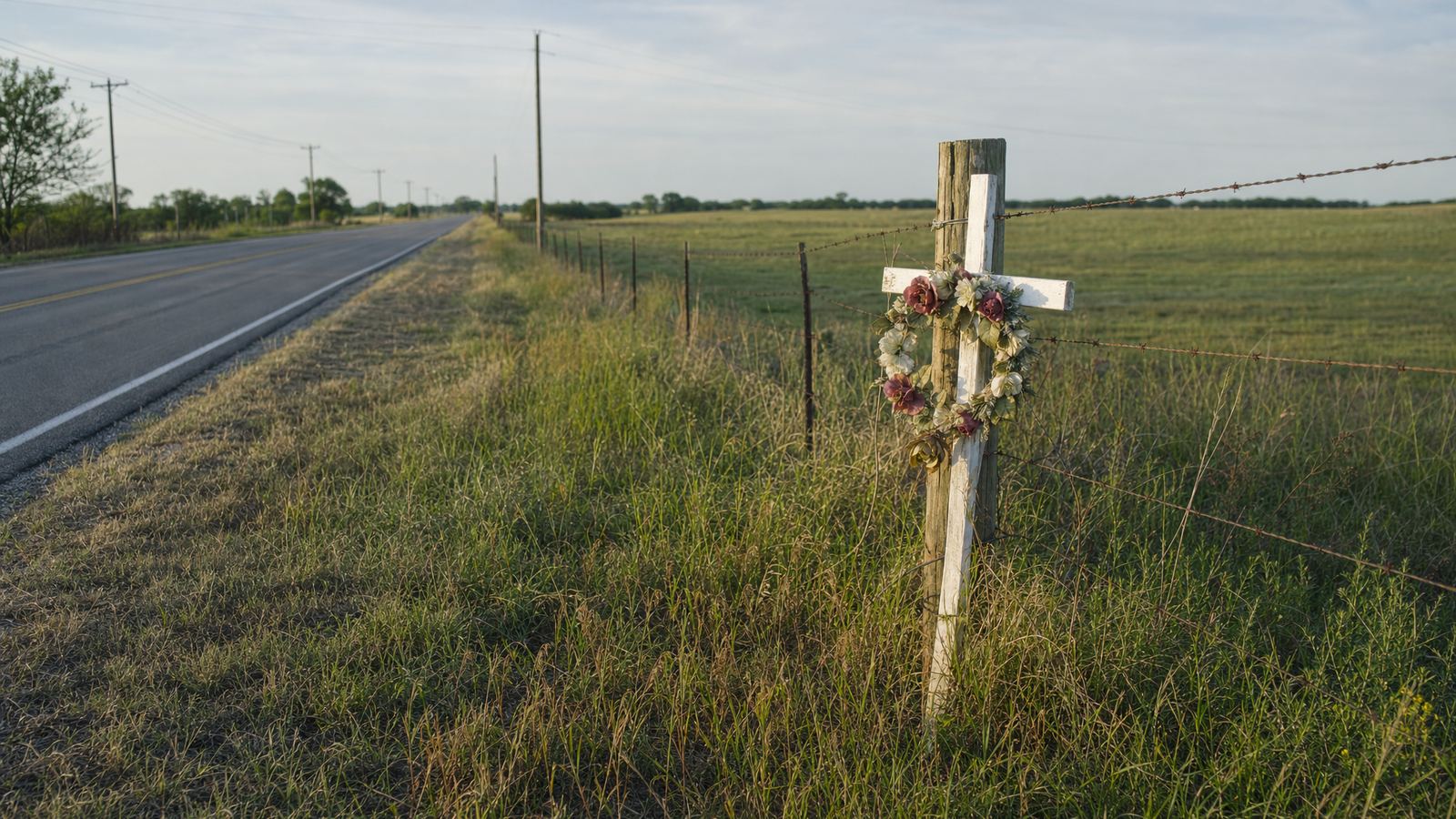
A cross, a wreath or a ring of plastic flowers on a fence post marks a place where someone died. Someone keeps it.
Drive any long road and you will pass them: a white cross on the shoulder, a wreath wired to a guardrail, a teddy bear zip-tied to a fence. They mark the place where someone died, most often in a crash, and they are almost always made and kept by people who loved that person. The tradition is old and widespread. In the American Southwest it is called a descanso, a resting place, and similar markers appear on roads across Latin America, Europe and Australia. The history of roadside memorials runs back well before cars.
What goes into one
Most start the same week, with flowers and candles left by friends. If the family decides to keep the place marked, something more permanent follows. A wooden cross is the most common, painted white and lettered with a first name or a nickname. Others use a small sign, a stone, a planted shrub, or a box mounted on a post with a lid that opens. Inside a box like that you might find laminated photos, notes left by passing friends, a rosary, a toy car.
The details are personal. A football team scarf. A fishing lure. A painted rock from a younger sister. Many families add something new on each visit, so a memorial that has stood for years reads like a slow diary.
Some memorials grow far beyond a single marker. A crash that killed several young people from one school can leave a fence lined with dozens of crosses, jerseys and signs, kept up by classmates for years after graduation. Others shrink over time into a single weathered post that only the family would know to look for.
Tending
Sun and road spray are hard on everything. Artificial flowers fade to pale blue in about a season. Paint on a cross peels within two summers. The people who tend these places learn quickly: outdoor enamel instead of craft paint, flowers made for cemetery use, zip ties replaced every spring before they snap, photos sealed in a clear sleeve and tucked out of direct sun.
Visits tend to cluster around a birthday, an anniversary, a holiday. Some families keep a memorial for a year and then take it down. Others keep one for decades, and the person tending it is often a parent or a grandparent who drives out alone.
The rules
Highway shoulders belong to the state or the county, and policies differ widely. Some states allow memorials as long as they do not block sight lines or sit inside the clear zone. Some offer official memorial signs on request. Others remove anything left on the right of way after a set period. A family planning something permanent can call the local highway office first and ask what is allowed. Crews generally treat these places gently, and many will call a phone number left on the back of a cross before removing anything.
For everyone else
Passing drivers sometimes stop to straighten a fallen cross or pick up a wreath blown into the ditch. That is a kind thing to do, as long as it is safe to pull over. Leave everything where you found it, and avoid adding items of your own. The place belongs to the people who keep it.
Mostly, a roadside memorial asks the driver going by to slow down for a second and remember that a road is full of people.