Paper that lasts
Acid, light and damp undo most keepsakes. Choosing the right paper and box stock costs a little more and saves a lot.
Ordinary paper is made from wood pulp that turns acidic as it ages. Over years the acid yellows the paper and spreads to anything it touches, which is why old newspaper clippings leave a brown shadow on the page they were tucked into. A box made from ordinary card does the same to a letter kept inside it.
What to buy
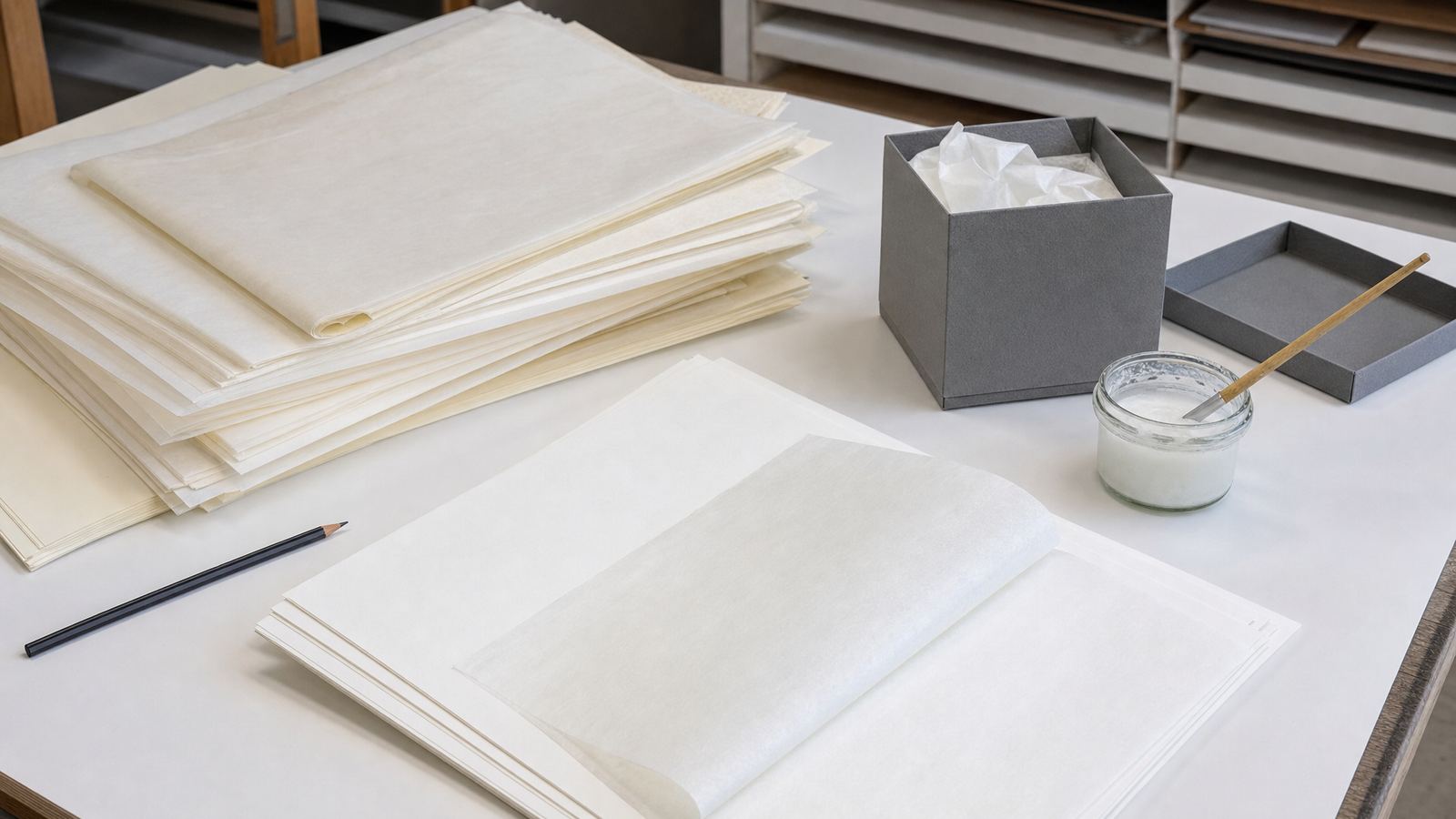
Look for paper and board labelled acid-free, and ideally lignin-free. For most keepsakes, buffered paper is a good choice, because the buffer absorbs acid drifting in from outside. Photographs and some textiles do better against unbuffered tissue, since a few photographic processes react badly to the buffer. Both are inexpensive from craft and framing suppliers.
The Library of Congress publishes clear, practical guidance on the care and storage of works on paper, and it is worth reading before putting anything irreplaceable away.
Glue, tape and ink
Ordinary clear tape yellows and its adhesive seeps into paper within a few years. Rubber cement stains. Use a wheat-starch paste, a PVA glue sold for bookbinding, or simple folded construction that needs no glue at all. Write labels in pencil or archival ink, never ballpoint, which can bleed over time.
Metal is its own problem. Paper clips and staples rust in a damp year and leave orange marks that never wash out. Remove them from letters before they go in the box, and if pages need to stay together, fold a strip of acid-free paper around them as a sleeve.
Photographs
Store photographs face to face only if they are separated by a sheet of unbuffered tissue, since prints left touching can stick together in humid weather. Hold them by the edges. Fingerprints carry oils that show up years later as smudges in the emulsion. If a photograph is already curled, let it stay curled rather than pressing it flat, which can crack the surface. A small box sized to the prints, so they stand upright or lie flat without sliding around, protects them better than a large box with a lot of loose space.
Where the box lives
Light fades ink and photographs, damp encourages mould, and heat speeds every kind of decay. An interior closet shelf is better than an attic or a basement, where the temperature swings and water finds its way in. Keep the box off the floor and away from outside walls.
Open the box once or twice a year. Look for brown spots, a musty smell, or insects. Catching any of them early is easy, and the visit is usually welcome anyway.